Takanishi Lab
After finishing my master’s degree in Germany I went to work in Shanghai for a couple of years. One day I did a tour of the computer science department at Fudan University. Fudan University at that time was famous for its Mathematics department and generally had the reputation of being a great university.
A young computer scientist named Xianyang Xue gave me a tour of the computer science department. While Xianyang’s focus was primarily on video analysis he also showed me a humanoid robot a colleague had been working on for some time. Compared to the humanoid robots you see in China nowadays this robot didn’t seem specifically advanced, still, it looked great and for some reason this triggered in me the idea that I’d want to work on humanoid robots.
At that time humanoid robots were a very niche research topic. The only way to work on such a project full-time was to pursue a PhD. There were two well known research clusters for humanoid robotics, one was at MIT where Rodney Brooks had pioneered humanoid robotics research since the 80s. His student Cynthia Breazeal had specialized on behavioral, human-interactive robotics.
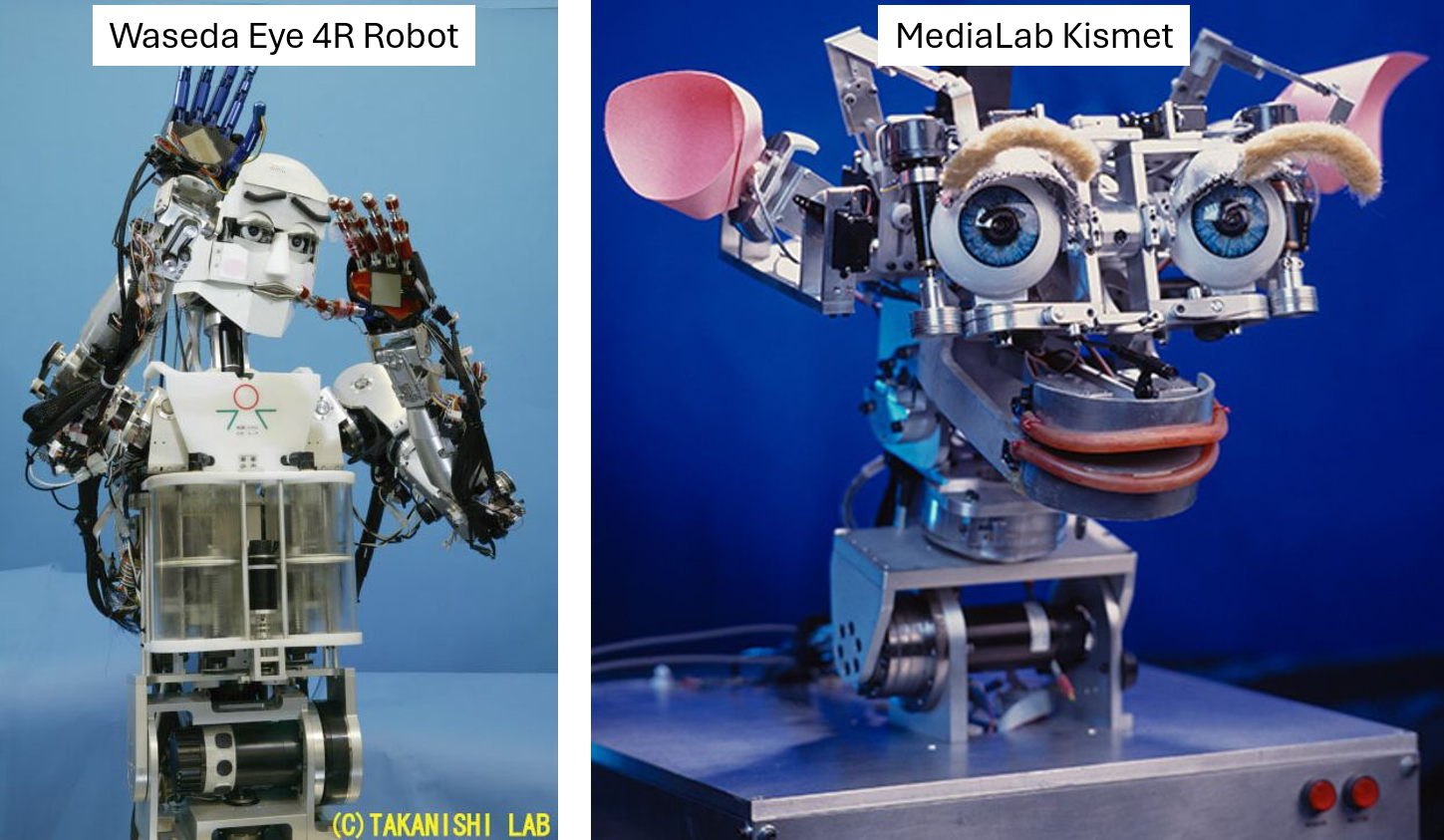
The other cluster was the humanoid robotics institute (HRI) at Waseda University in Tokyo. The lab at Waseda University was originally founded by Prof. Kato who famously had built an anthropomorphic piano playing robot that was exhibited at a world exhibition in Tsukuba in 1985. Prof. Atsuo Takanishi had then taken over the lab from Prof. Kato and continued his work on humanoids. Takanishi Lab had been exploring very similar topics to Cynthia Breazeal and had expanded significantly on the topic of expressive robotic interaction. In fact their Waseda Eye 4R robot had several features that the team at MIT hadn’t been able to implement with Kismet yet, such as an emotional cortex, audio in- and output as well as arms and a torso. Very impressive!
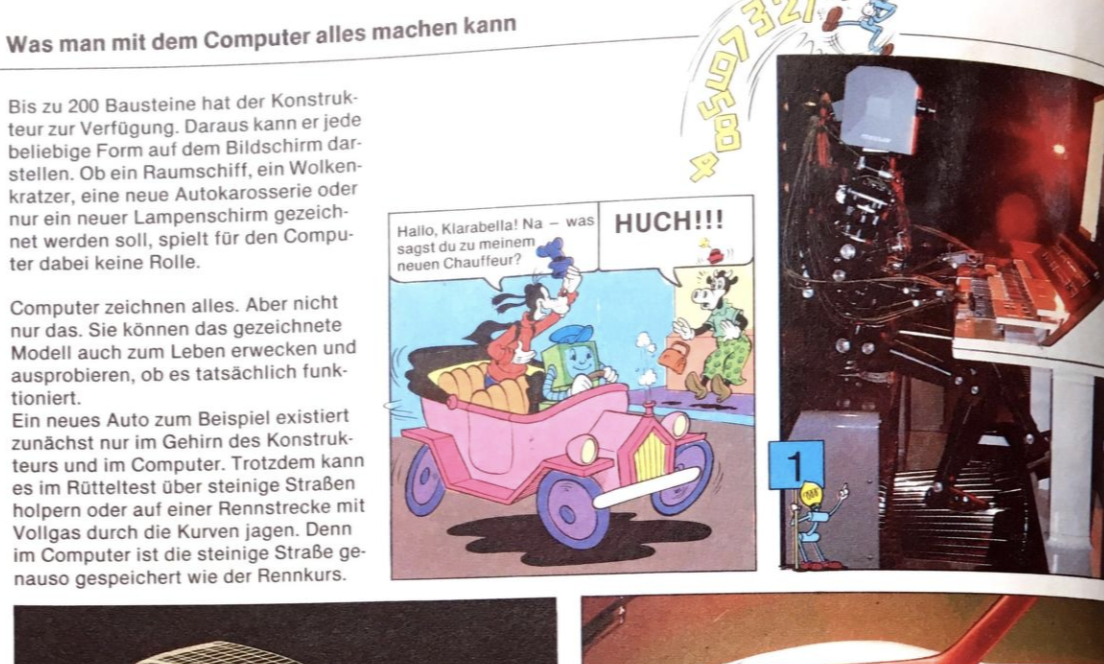
What eventually brought me to the conclusion to pursue studying in Tokyo was actually a German Donald Duck comic book I had read in my childhood. That piano playing robot that Prof. Kato had presented at the world expo had been featured in this comic book and I still remembered it. I felt I was going “full circle”!
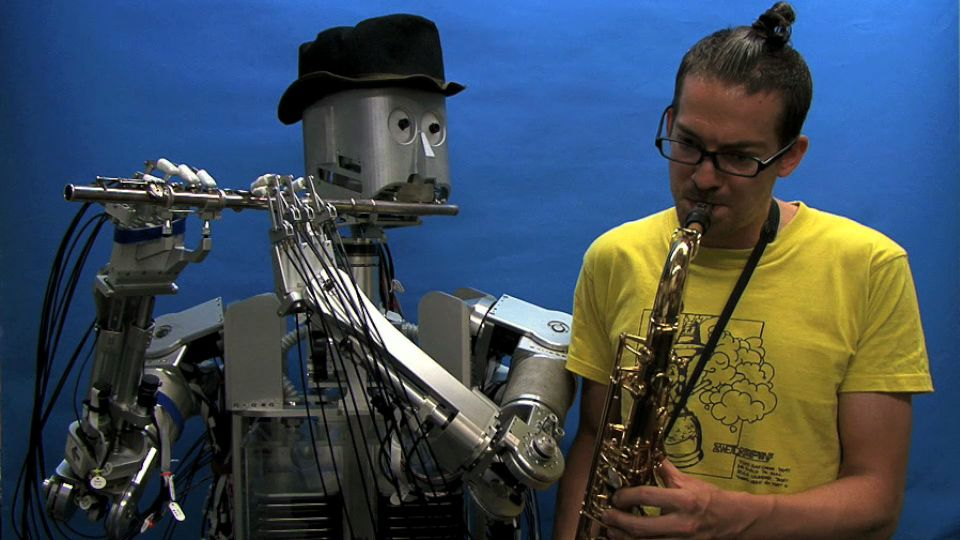
At Takanishi lab I started working on the Waseda Flutist robot, an anthropomorphic robot emulating human flute playing. The focus of this project was less to build a robot that can excel at playing an instrument like a human, but rather the challenge of artificially recreating the complex mechanics involved in creating the flute sound using human-like motor skills.
At the time I joined the lab the work on the flutist robot had been going on for several generations of students and robot versions. Therefore the mechanics and control of the robot were already in a very advanced stage.
It was interesting to experience how the distribution of roles between the student generations worked. Bachelor students would usually work on the mechanical design of parts of the robot, while master students worked on the more scientific, usually software driven problems. Passing the knowledge from one generation of students to the next would be almost like a ritual, following the traditional Japanese principle of 先輩 (older student / teacher) and 後輩 (younger student / learner).
For my research I kept the focus on my original interest of exploring the interaction between robot and human. In case of the flutist robot I wanted to find out how the two could work together musically. The fundamental idea of my PhD thesis was therefore that a human and a robot playing a musical piece together would deliver a more engaging and entertaining performance, if they had means of interacting with each other while playing a song.
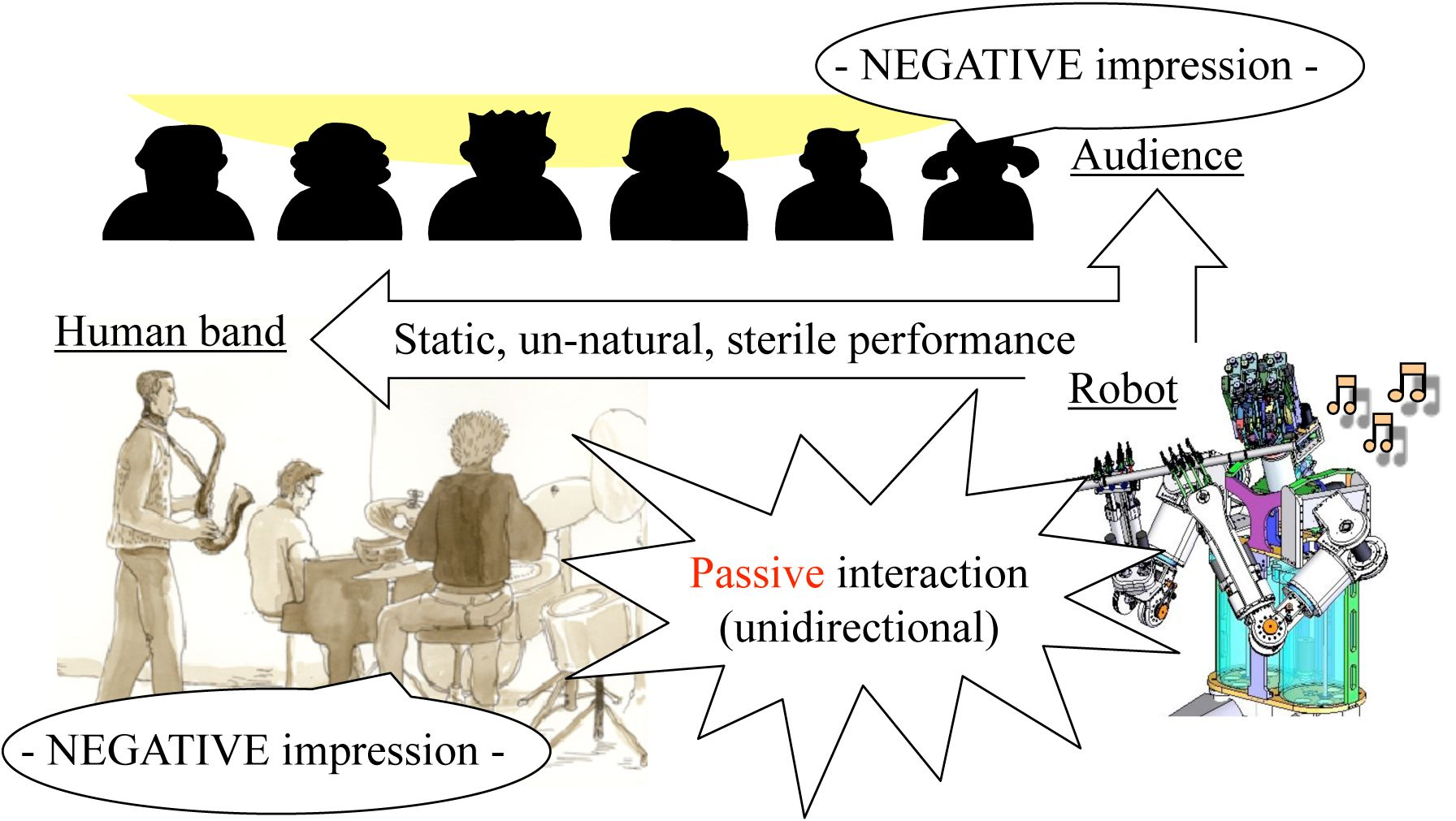
At least in my theory, having a robot just plainly accompany a human while playing, would result in a static unnatural performance that would be less entertaining to a human audience. On the contrary, as soon as some kind of interaction took place, the performance would be lively, human-like and much more engaging.
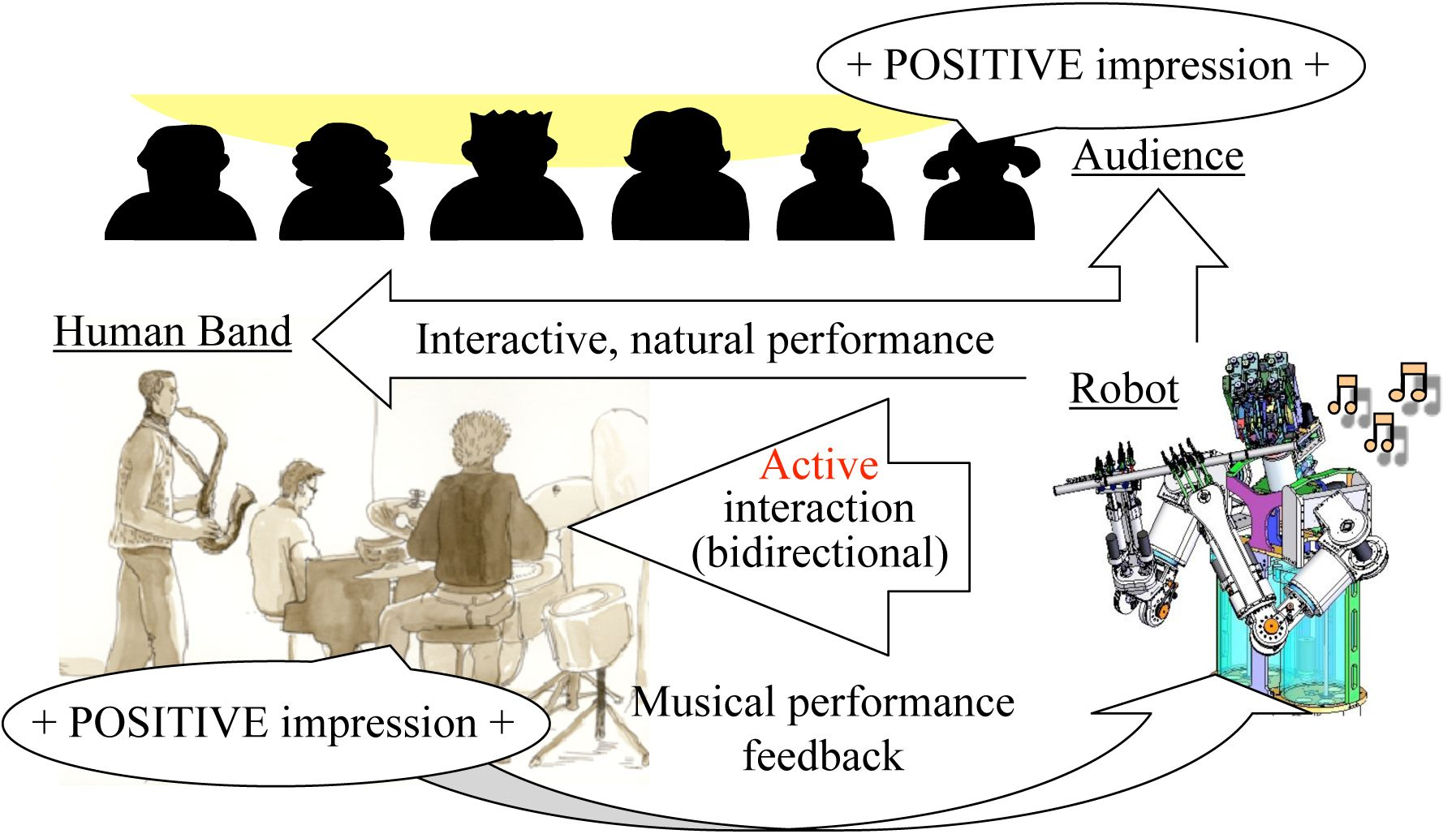
I took this idea from the fact that Jazz musicians in a band would use multiple ways to give subtle cues to each other, either by playing certain musical patterns, or by moving their instruments in a certain way.
While I did explore both, the aural and the visual interaction strategies between musicians, I initially worked on allowing the robot to understand visual feedback from other musicians. While I describe several approaches to do this in my thesis, a relatively simple method turned out to be quite effective. I called it the virtual fader. The virtual fader, like its mechanical counterpart, consists of a bar that can be moved back and forth, but not by moving your finger but by moving an object in the visual space of the robot. In this way I was able to manipulate live performance parameters of the robot by just moving my saxophone back and forth.
A PhD thesis in Japan usually takes around 4 years, and my time at Takanishi Lab passed quite quickly. While the work on the interaction system progressed quite well, one of the hardest challenges was the robot itself. The flutist robot was a very complex device with more than 50 degrees of freedom. If only one finger didn’t move correctly or the shape of the robot’s lips wouldn’t be shaped adequately, an experiment would fail. To get the whole system to a point where its performance was robust enough to focus more on interaction with humans took a lot of time and effort. But, in the end it all worked out great!
In summary, my core assumption that an interactive human-robot performance would be more entertaining than a passive playback, including the technical methodology behind it, proved to be correct. If you’d like to have a look at the details, download my thesis from here.
I’m excited that humanoid robots are becoming prime time news now and am so happy to be able to finally engage deeper into this field with a commercially viable perspective. In a way the recent progress in AI and humanoids gives new legitimacy to my research and also to a lot of other research done at Takanishi Lab. Back in the day exploring the interaction between robots and humans within a human environment would be looked at as distant science fiction. Turns out these ideas weren’t so far-fetched at all.
There are a lot more episodes about my time at Takanishi Lab, stay tuned! Thank you to Prof. Takanishi and Prof. Jorge Solis for their wonderful support and endless patience with me :)